Wednesday, February 1, 2012

Istanbul, Turkey - 2011

The warmth and genuine kindness of the Turkish people made a lasting impression on me. Istanbul is one of the few places in the world where I could see myself living for a few years. 

July 13

We left Paris early on a Wednesday to head out to Istanbul. With very little preparation, we did not know how much the currency was worth or even if Istanbul was in the same time zone. Our first surprise was that we needed a visa to get into the country.  Fortunately, the purchase of tourist visas was conveniently available as soon as we got off the plane. 

Once out of the airport the taxi took as straight to the hotel that Pedro had booked. The Avicenna was a beautiful white hotel overlooking the famous Blue Mosque that is so famous in Istanbul. Once I had a look inside the hotel, I knew that it was far above what I would normally spend. Its luxurious interior was in fact an early birthday surprise! 

From there we worked out our itinerary for the next few days and made a reservation for a restaurant that was to host belly dancers. A ghetto version of celebrity mini bus picked us up at the hotel and took as to the restaurant… for free! After getting out of the van, a small boy escorted us to the restaurant. Located right in the heart of Gerdantik Sk, we had definitely walked into a tourist trap, but we were willing to play the game. We ate on a balcony where live music was playing and we could overlook the other restaurants and people eating out in the street. This was the first time that I really felt like I was on vacation. The food was excellent and the thing to eat in Istanbul is seafood! We had octopus, shrimps, fried calamari, red bell peppers and ratatouille as appetizers, and a fish ragout served over an open flame for the main course. Because the night was slow the belly dancers never came out, but the good food and atmosphere made up for the disappointment. 

Just in front of our table was an Arab couple visibly on a date. The woman, who normally was completely covered, had removed the veil from her face in order to eat. Although I could not understand anything that was spoken between them, their conversation seemed light hearted and jovial. I wondered if she was his wife or if they were undergoing some kind of courtship. It is strange how limited we are by our cultural perspective. There are so many things about their way of life that I will probably just never understand. 

As the sun set on the city, we decided to walk back to the hotel. In passing through the places where people live, the mix of occidental and oriental cultural was really striking. In addition, many of the homes were extremely run down which was in contrast to immaculate monuments all around the city. The people look the part as well, a mix of Arabic and European facial features and body shapes. Back in our luxurious hotel, we tried to get to sleep despite the sweltering heat!

July 14

Today was the first full day. We set out to hit the major sites in Istanbul after making the most of the free breakfast offered by the hotel; a breakfast that was on a little terrace overlooking the city.

Hagia Sofia

Once we arrived, we were disillusioned by the an enormous line. As we were getting ready to queue, a gentleman asked if we were interested in having a guide for five Euros more and without having to wait in line. Yes! Our guide turned out to be fantastic and was able to cram thousands of years of history into 10 minutes. 

Hagia Sofia, means Holy Wisdom and is absolutely breathtaking. From the date of its dedication in 360 until 1453, it served as the Greek Patriarchal cathedral of Constantinople, except between 1204 and 1261, when it was converted to a Roman Catholic cathedral under the Latin Patriarch of Constantinople of the Western Crusader established Latin Empire. The building became a mosque from 29 May 1453 until 1931, when it was secularized. It was opened as a museum on February 1, 1935. Hagia Sopia is the oldest standing Christian Church and was built only 400 years after the death of Christ; before the Catholic Church had separated from the Greek Orthodox Church, and before Islam was a religion. This is the oldest building I have ever been in and it made Europe seem like a young continent.

It was fascinating to see how Christ and the holy figures were represented during this period, so recent from His having walked the earth. The angels that one reads about in Revelations with wing covering their bodies, feet, and hands were painted on the four corners of the church. Because Muslims do not portray human or humanlike figures in their mosques, the faces had been covered during the period that the church became a mosque. However, one of the faces was uncovered when it became a museum in order to reveal what it was looked like. The entire ceiling was made of   tiny mosaics, over 31 million the guide was careful to specify. Many of these mosaics were covered up when Hagia Sophia was a mosque, but had now been partially revealed. As the guide spoke about stones coming from Libya and Egypt, I could not help but think of the temple of Solomon. The church was originally built facing Jerusalem, but the alter was redirected to face Mecca when it was a mosque. What a powerful piece of history!

Sunken Palace

From there we went to the Basilica Cistern. The underground cistern was dark and damp and seemed to capture something quite magical. It was built by Justinias, emperor during the Byzantine Empire in the 6th century and encompasses an underground labyrinth of columns. A wooden walk has been built in order to explore the cistern from within and there still remains about two feet of water with fish swimming about. In the farther southwestern part, two medusa heads serve as the base of the columns. They are considered masterpieces of the Roman Period. It was there, that we got pictures dressed up as Sultans from another time. Quite fun!

Blue Mosque

From there we moseyed over to the Blue Mosque that marks the Istanbul skyline and is probably the most famous part of the city. When we arrived, it as in the time of Muslim prayer and so we had to wait a bit. In order to get inside, we had to take of our shoes and Pedro had to wear a cloth around his waste in order to cover his knees. This piece of architecture was simply stunning.

The mosque was commissioned by Sultan Ahmet I when he was only 19 years old. It was built near the Hagia Sophia, over the site of the ancient hippodrome and Byzantine imperial palace. Construction work began in 1609 and took seven years. The Blue Mosque is just like it is named, blue. As Muslims do not have representations of people in their places of worship, everything was covered in intricate painted blue tiles and stain glass windows save the flooring which is covered by a giant red oriental rug. I felt very privileged to be able to have been in this place and to have seen such things. 

Hippodrome and Obelisk
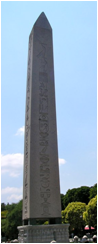
After the mosque, we wanted to see the obelisk and hippodrome that were supposed to be next door. The Egyptian obelisk was easy to spot. I was a bit unimpressed by its stature. It just looked like a giant piece of concrete with Eyptian writing; paling in comparison to the Obelisk in Paris or even in Washington. However, the obelisk was made of granite and brought from Egypt in 390 for the emperor Teodosio.  

We must have looked around for about 15 minutes, carefully scanning the map, before finally figuring out that we were actually standing on the hippodrome. The hippodrome no longer had horses and had only kept its original form since it had been made into a city square.

Topkapi Palace

The Topkapı Palace is a palace in Istanbul, Turkey, which was the official and primary residence in the city of the Ottoman Sultans for approximately 400 years (1465-1856) of their 624-year reign.

The opulence and wealth in the palace was over the top. All of the trimmings were in gold. The streets were lined with little black and white pebbles forming intricate designs. The rooms were covered with little tiles and mosaics. The views overlooking the Mediterranean Sea and surrounding forests were incredible. I tried to imagine what life must have been like when it was still inhabited by sultans.

Apparently, it was not that wonderful. The palace hosts a number of secrets. This was the home of Selim II the drunkard, who died from an overdose of Champagne. This is also where Ibrahim lost his mind because his brother had kept him in prison for 22 years. It was in this palace that Roxelana the horrific, a concubine, was said to have been able to convert herself into right hand of Soliman the Great. History speaks of many more stories like this, and the palace is known for its crazy intrigues.   

As I am writing this in the hotel room, the call for prayer has just begun. The eerie sound of Muslim song is amplified throughout the city and the echo of its believers can be heard across the land.  

July 15

Today was dedicated to a guided tour recommended by our hotel. We were told that the bus would be 15 minutes late because the driver has gotten into an accident and that one of the people was hurt. I was relieved to know that our driver could be trusted! On the bus, we passed by the Istanbul Train Station that was the last stop for the famous Orient Express. The Orient Express took its passengers from Paris to Istanbul, the journey we had just made by plane. 

Somehow, we made it safely to the boat that took us across the Black Sea and the Sea of Marmara. It is from Marmara that we derive the work marble, an important part of the Turkish economy. The Sea of Marmara divides Istanbul into two parts and marks the distinction between the continents of Europe and Asia. Travelling between the two continents was a lot of fun. Strangely enough, it is the European side that is marked by mosques and historical monuments, whereas on the Asian site were situated enormous homes that reminded me of the types of beach homes one might find on the California coast. 

After the boat ride, we visited the Dolmabahçe Mosque that is located on the Bosphorus. The mosque was built for Sultan Abdülmecid's mother in a Baroque fashion. Although the layout was that of a typical mosque, the interior reminded me of the kinds of music halls that Bach used to perform in Vienna. This city is truly the mix of Occidental and Arabic culture. 

From there, we took a chair lift over the hillside cemetery of Eyüp where we could see the surrounding walls and aqueducts built by Constantine. This Roman Emperor gave the city its name and was the first to convert to Christianity. His doing so is arguably the single greatest act in making the then Christian sect the religion what it is today; for better or for worse. 

We had a nice lunch before heading out to the Dolmabahçe Palace built in 1856. This palace made the Palace of Versailles look like the maids quarters. I have never seen anything so opulent in my entire life. Everything was lined with gold. The staircases were made of marble and crystal. Giant crystal chandeliers adorned every room and the gardens were paradisiacal. The palace, financed by French and English bankers, took more than a hundred years to be paid off. It is referred to the locals as the bankrupt palace because of its huge detriment to the Turkish economy. Nevertheless, it must be among the most beautiful sites in the world, and as someone who lives in and loves Paris, that is saying something!

Our last stop was over in Asia where we had ice cream on a hillside overlooking the European continent, not too shabby! Back in the hotel room, Pedro and I are getting ready to go out for some fresh fish before hitting the most famous tradition Turkish bath, Cemberlitas. 

*  *  *

Before slipping off to bed, I have to write about the traditional Turkish bath. What a trip! This was an incredible human experience. It is more like a hammam. The building is a huge dome whose base and supporting columns are made of marble. In the middle there is a giant marble slab where you lay out. The marble is warm and almost hot. You are wearing a Turkish wrap or Pestemal. People are speaking in Turkish, which is a bit like Spanish or Italian; speak it loud or don't speak it at all. Once your body temperature has risen due to the steam and warm marble, someone throws hot water on you. At this point, an enormous Turkish man with a big glove scrubs your back side and then flips you over like a pancake to get the other side.  Now covered in soap, you sit down on the outer edge of the room next to one of the many fossetts. There, the Turkish man throws more hot water on you until you are completely rinsed off. Someone points to the door where you go to get a massage. You are discretely changed into a dry Pestemal, spread out on a table and another Turkish man gives you the most serious massage you have had in your life. For me, this was quite easy to accomplish as it was my first professional massage! There is nothing delicate about it. Your body is slapped, beaten, and pressed. Once he finds a knot, it is all over. Afterwards, you take a shower and try to figure out what just happened to you. Once outside, you feel like a million bucks. Your body is completely relaxed and it is one of the rare moments in life where your vision seems more acute and the world seems absolutely spectacular for just a moment. 

July 16

We got up early to take another boat ride, but this time out to the Princes' Islands; a string of six islands that are just off the coast of Istanbul. Among the passengers were Arabic women in burkas, two French women dressed in summer wear, and an Argentinean woman in a bikini. What a mix! 

Traveling from one island to another was exquisite. On the islands, motors are not allowed, so the only means of transportation is horse and buggy! The islands contain the remnants of the Greek culture that was once here before the Turkish tribes invaded and eventually conquered the mainland. A large Greek Orthodox Church is found on each one. Having my roots in Western Europe, it is easy to forget that the Catholic Church is simply a result of the many divisions and factions that mark the pages of Christian history.

The islands were like little beach communities where people were dressed in shorts and thongs. Muslim veils were few and far between. Along the way we made friends with the two French ladies, one of whom was also Turkish. Getting her insight into the culture and way of life made the experience all the richer. It is odd how, while on vacation, we can talk and laugh about subjects of the heart and even share our lives with perfect strangers. 

Today was like a vacation from our vacations. For the last island, the boat dropped off those who wanted to shop and then cruised around to the beach for those who wanted to swim. Pedro and I wanted to swim! Before diving in I noticed that there were tiny little jelly fish all over the waters. When I asked the guide, he assured me that they did not sting. Enough said, I was in the water and grateful to have a relief from the immense heat. Indeed, the jelly fish did not sting. I could even pick them up with my hands. The texture was slimy like how I would imagine touching a giant slug would be. They were completely transparent and without any color. Swimming among them and watching their slow movements in the water was extremely relaxing.

On the way back we passed by Kiz Kulesi or the Maiden's Tower. Our new French/Turkish friend recounted the legend: "After a series of three dreams, the Turkish sultan sought to have them interpreted. The seer was reluctant to reveal the meaning, but finally gave in due to the sultan's insistence. He claimed that the sultan's beloved daughter would be killed by a serpent before the end of her 18th birthday. The sultan, in an effort to thwart his daughter's early demise had a tower built in the middle of the Bosphorus, where she was to live until her 18th birthday. She was only frequented by her father and a dear friend. On the 18th birthday of the princess, her childhood friend brought her a basket of freshly picked apples. That night a venomous snake that had managed to creep into the basket slithered out and bit the sultan's daughter. She died in her father's arms just as the oracle had predicted. Hence the name Maiden's Tower."  

July 17
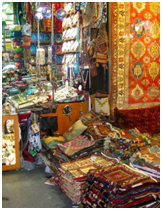
Today was fairly calm. We walked down to the Grand Bazaar to discover that it was closed on Sundays. From there, we walked to the Little Hagia Sophia, which was quite beautiful. Much smaller than the first enormous Hagia Sophia that we had seen the day we arrived; this one had more of a subtle charm. Again, like the first it was once a church that had been converted to a mosque. 

From there we walked along the coast a bit before making our way back across town to get to the Egyptian Spice Market. The market was pretty impressive with lots of Turkish delicacies including the famous Turkish delights. The Spice Bazaar is one of the oldest bazaars in the city. Located in Fatih, it is the second largest covered shopping complex after the Grand Bazaar. The bazaar gets its name from the fact that many spices were imported via Egypt during the Ottoman period. The bazaar was and still is the center for all spice trade in Istanbul.

We then had to change hotels. The new hotel is quite nice and located to the newer part of the city, which means that we will have more opportunities to go out. That being said, I have been lying on the bed for hours now enjoying doing absolutely nothing. 

July 18

Today we finally made it to the Grand Bazaar. On the way we passed by a book store that was selling translated versions of the Koran. I got a hard back version as well as a smaller paperback version to read in the metro. When Pedro and I finish the Bible this year, I am going to start reading the Koran in 2012. 

The Grand Bazaar is one of the largest and oldest covered markets in the world, with more than 58 covered streets and over 4,000 shops that attract between 250,000 and half a million visitors a day. It is well known for its jewelry, pottery, spice, and carpet shops. Many of the stalls in the bazaar are grouped by the type of goods, with special areas for leather coats, gold jewelry, etc. The grand bazaar houses two mosques, two hammams, four fountains, and multiple restaurants and cafes. The sprawling complex consists of 12 major buildings and has 22 doors.

In this labyrinth of covered shopping, you can find everything from antiques to the cheap souvenirs that tourists often buy. I had set out to buy a ceramic vase for myself and Pedro, fun Turkish clothing for his niece and nephews. Clearly, he is the altruistic one! On the way to my ceramic vase, I ended up getting a small wooden box and a genie's lamp. I really enjoyed the people. The Turkish are very light hearted and have a good sense of humor. They like to negotiate like other Arabic cultures, but there are much better about it. I remember in Morocco that I had to start from half of the price they started with and be ready to walk out at any given moment. However, in Turkey, the price is just a bit higher than the real price and the negotiation is a lot less aggressive. I finally ended up getting a hand painted ceramic vase with the golden horn design that is the signature of Turkish ceramic art. 
On the way back to the hotel, we passed by an El Torito. I could not believe that there was a Mexican restaurant in Turkey, let alone an El Torito. As this was my favorite restaurant as I kid, I had to check it out. The food was great, much better than the Mexican food we have in France. It was fairly authentic. 
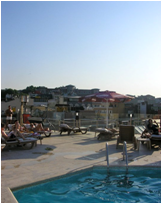
After dinner we decided to go to a roof top pool in order to cool off. As we were there the sun began to set. It really felt like a moment in paradise.

Tonight, we are going to another hammam and then out dancing.  

July 19

This was our last full day in Turkey. We decided to forget the cultural aspect and escape the heat by heading over to the water park. As it was a bit out of town, we took the train, a bus and then a taxi to get there. We were motivated! I was impressed by the condition of the roads in Turkey and the quality of the public transport. The bus that we took in the middle of our journey actually had its own section in the middle of the freeway. Despite the grueling traffic on either side, we just zoomed on ahead. 

The park was complete with several pools, waterfalls, a wave machined and numerous slides. It was a real change from the heart of Istanbul. After seeing so many veils it was quite a contrast to being surrounded by so many bikinis. They even hosted a belling dancing contest in the middle of the complex. For anyone that has ever wondered how the conservative Muslim woman can go for a swim, the answer is the burkini. I thought it was a joke at first, but we saw a few of them at the water park. The burkini is a full length bathing suit like a wetsuit, with a bathing suit dress over the top and of course, a little hat to hide one's hair. It looks incredibly uncomfortable, but at least you can go in the water while your husband is around. 

We had dinner at a little fish restaurant under the Galata bridge where the fisherman bring in the catch of the day each morning. The bridge leads to Taksim, the more European part of Istanbul where we had gone out dancing the night before and where we went out dancing again tonight. 

Istanbul was a fantastic vacation spot. Although we only touched the surface of its cultural and historical wealth, I was extremely impressed. The warmth and the humor of the Turkish people was a pleasant surprise, and their hospitality was among the most genuine that I have experienced in my all my travels thus far.

Stockholm, Sweden - 2011

Wednesday, June 29

I suspect that this travel will be short and sweet much like this, my first trip to Sweden. Exhausted from the relentless travelling that my new job entails, my journey began on a plane. I was on my way to the Arklanda airport with the objective of handing over a mission dedicated to the Change Management of the largest contract in human resource outsourcing on the market. My six months working for Sara, the Swedish project lead, had come to an end and I had already been given a new mission covering the implementation of a shared service centre in the Philippines for the same contract. 

I must admit that I was excited to have been asked to come to Stockholm in order to complete the knowledge transfer with the new members of Sara’s team. As I started to fly over the country I was instantly captivated by the lay of the land. When you see Sweden on the map, you would think that it is a solid piece of land, but it is in fact composed of over 4000 different islands. Even from the air, the landscape was stunning. 

Once down on the ground, I was reminded of what my friend Bethany had said about her trip to Sweden, “Everyone is beautiful. It is just ridiculous!” I could not help but echo the sentiment. The women are blond with deep blue eyes, and oddly enough, they have been spared the English curse of pasty skin, and all have the kind of olive skin that you see around the Mediterranean. Bleach blond without the bleach and tan without the tanning salon, it is enough to drive Californian girls crazy. In addition, everyone is fit! The true descendants of the Vikings, everyone looks like they spend half their life in the gym. 

The taxi ride from the airport to the office was about 40 minutes. I was still taken by the beauty of the landscape. Everything was so lush and green with rivers and lakes around every bend. Because Sweden is composed of so many islands, all of the land ends up being waterfront property. I was happy to see that our office building was no exception!

After work Sara really wanted to show us around. Her pride in her heritage made it a lot of fun. She first took us out for drinks at a little restaurant just outside the office. Again, we were on the water and the view was absolutely spectacular. Each island had an old church in the middle with a giant steeple and quant little bridges connected one island to another. As we began to talk about the history, Sara made it clear that Sweden was the leader of the Nordic countries: Norway, Sweden, Finland, and Demark. From then on we made lots of jokes about how things were probably even better in Olso, Norway although none of us had ever been. 

From there, we went to another restaurant for dinner. While waiting for our table, we had another drink on a little barge that had been set up for the occasion. It was already nine o’clock in the evening and the sun showed no signed of setting. Sat in one of Stockholm’s most trendy restaurants, dinner was paid for by the project. The restaurant was composed of several different kitchens: Swedish, Japanese, French, etc. The kitchens were scattered around the enormous venue with elegant tables in between. We were able to pick and chose from any of the menus. I stayed with the Swedish kitchen, having salmon tartar and biff rydberg, a Swedish dish made famous in Stockholm. Everything was delicious! The salmon was so fresh and the beef had a tasty sweet and savory sauce. 

After dinner, we went back to the hotel and it was then that I realized how much Sara wanted us to really enjoy being in her home town. The art deco Scandic Hotel had a lounge in the lobby that was functioned as a bar and hosted live bands. We stayed there for a while before walking down to another little bar for a final mojito. At 3:30 in the morning, the sun had made a meager attempt to set and was rising again; just in time for us to go to bed! It was about this time that I understood why all consultants are single and without children. Consultants are a strange breed that likes to travel and to make friends on the go.

Thursday, June 30

The next day everyone was in the office at nine, how I do not know. For lunch I had traditional Swedish herring rolls that were quite good. Incorporating so much fish into their diet is probably part of why they are so healthy. After lunch we went for a little walk. People were canoeing along the lakes and rivers and even working out in the grass with their personal trainers. I thought about alI the strange looks that I get in Paris just going out for a jog in the city and it was clear to me that I was no longer in France! 

It was truly a shame that I could not have stayed longer, but I had to be back in the Paris office the next morning. More than pleasantly surprised by my trip to Stockholm, the city is now on my “Best places to visit in Europe” list along with Lisbon and Prague.

Prague, Czech Republic - 2010

Friday, October 15

We dropped into Prague late on a Friday night with just enough time to catch a cab, announce our arrival at the hotel and hop into bed. After several crazy weeks at work, I was happy to know that Pedro had been able to take care of the hotel in respecting the two critical criteria: close to the city center and cheap! I was afraid that the first criteria would be lost as the taxi cab went around the city whose view by night was simply extraordinary. However, the taxi brought us right into the heart of Prague. With a hotel room at the top of the building, I could not resist the temptation to open the skylight, to climb out onto the roof and to take a look at the city that we were to explore the next day. Prague is among the most beautiful cities that I have ever seen. 

Saturday, October 16

We woke up a bit late and decided to take a look at the city guides offered by the hotel. As chance would have it, guided walking tours were starting in 15 minutes just around the corner from our hotel. We finished getting ready and rushed to the Astronomical Clock, the designated rendezvous. The guide was our first good introduction to Eastern European culture. His words were slow and without the slightest excess of emotion. As he recounted a summarized version of the history of the Bohemian people, every anecdote seemed begin with a slight ray of hope and end with, “…and this was a great tragedy.” Nevertheless, as the tour continued on, we managed to get a little bit of humor out or our solemn guide. 

I am fairly sure that Prague is the most beautiful of all of the cities that I have visited. For me, it is only rivaled by Paris and maybe Lisbon. Our first visit was the point of departure, the Astronomical Clock. 

The Prague Astronomical Clock or Prague is a medieval clock mounted on the southern wall of City Hall in the Old Town Square. The clock is like a primitive planetarium, displaying the current state of the universe. What is most impressive is the astronomical dial. It has a background that represents the standing Earth and sky, and surrounding it operate four main moving components: the zodiacal ring, an outer rotating ring, an icon representing the Sun, and an icon representing the Moon. There is also calendar dial with medallions representing the 12 months. Every hour on the hour "The Walk of the Apostles" can be seen where figurines of the Apostles and other moving sculptures present themselves. The clock was designed by Mikuláš of Kadaň. According to our guide, legend would have it that the clockmaker was offered many jobs after this most impressive creation. However, because the ruler in Prague wanted the clock to be unique, he forbade Mikuláš to accept any of these offers and ultimately decided to take the artisans life. As a dying wish, Mikuláš asked to touch the clock one last name. Simply touching his creation in the perfect spot, he was able to make it stop. It would take over a hundred years to figure out how to make it work again. What is true is that the clock was stopped during a very long period of time. Again, the story ended with “…and this was a great tragedy.” Nonetheless, the clock was working when we even saw it chime. 

Second stop, the Charles Bridge! I had been told about the bridge before coming to Prague. It is considered to be an outdoor art gallery. The bridge is lined with sculptures each representing important parts of Prague’s history. Built of stone with old world lanterns on either side, it is quite spectacular. From where we were positioned, we were overlooking the Prague castle, the ancient cathedral, and the bronze roof of the Italian Chapel. The skyline in Prague is everything that an American would have in mind when thinking about the setting of a romantic movie that takes place in Old Europe. 

One of the statues is reputed for granting your wish if you touch the bronze icon. Our guide told us to be very careful to only touch the bronze lady and not the dog as the dog would bring misfortune. Apparently, one night in history the king had decided to sleep with his hunting dogs. Unknowingly, the queen slipped into the room and tiptoed into the bed. The dogs mistook her for an intruder and she was devoured. Our happy guide explained in detail how her legs and arms were found in different parts of the room and how her eye was found beneath the dresser; a bit of Bohemian humor! This also was “…a great tragedy.” Needless to say, we all avoided the dog. 

Just on the other side of the bridge we walked up the stairs to the Prague Castle. This was where Obama had delivered his speech when visiting Prague earlier in the year. According to the Guinness Book of World Records, the Prague Castle is the largest coherent castle complex in the world with an area of almost 70000 m², being 570 meters in length and an average of about 130 meters wide. The castle dates back to 870AD. The guide spoke of the Thirty Year’s War where the Swedes looted the castle, taking most of its most precious paintings and wealth. The former president of the Czech Republic had recently asked that Sweden return some of the goods, but he replied that this was an old story. This too is “…a great tragedy.”

Within the castle is the Gothic Saint Vitus Cathedal. The full name of the cathedral is St. Vitus, St. Wenceslas and St. Adalbert Cathedral and it contains the tombs of many Bohemian kings and Holy Roman Emperors. The cathedral was heavily influenced by French architecture and culture, and many of its aspects are similar to those of Notre Dame. The church has some of the most beautiful stain glass windows that I have ever seen; two that are extremely impressive: the blue and the green windows. These windows are in a Neo Gothic style and stand out from the rest. Our guide told us that there was not enough money to complete the windows and the so that private parties were asked to make donations. The companies that made the donations asked for advertisements in return and so at the bottom of these two windows there is a small advertisement saying by whom they were donated. Our guide pointed out that each company had gone bankrupt the following year. “Divine punishment”, he attested. 

Just outside the cathedral, they were selling hot wine. I love hot wine and I do not intend to have another Christmas season without it! Our guide was careful to point out that this was not German tradition, but that it originally came from Bohemia. 

By this time, we had left the guide and decided to visit Prague on our own. We walked through the Convent of Saint Agnes and the Powder Tower.  The gothic Powder Tower was built in 1475 during the reign of King Vladislav II at the site of an 11th century gate, one of Prague's 13 original city gates. It got its name because it was once used as a store house for gun powder. Up at the top, the view was simple breathtaking. 

From there we walked through the city visiting, passing by the Romanesque Tyn Church and the Estates Theatre with its golden roof. Heading back for dinner we happened upon the Medival Museum of Torture. This was quite a detour from the romantic atmosphere in Prague. It is unfathomable how in a time when technology was only pudding, the science of torture had been studied to the finest detail. After this gory interlude, night was falling and it was definitely time to eat!

We happened upon the most picturesque restaurant in Prague! Not a soul was in the restaurant apart from the waiter and us. We were sat in front of the window as the lanterns were being lit and a light rain was beginning to fall. I did not expect much from the food in the Czech Republic, but the dinner was amazing. As a starter I had roast duck with cranberry sauce followed by a lentil cream soup. I then had slow cooked pork served in a blue cheese sauce and profiteroles for desert. I was so enamored with my food that as I write this, I can scarcely remember what Pedro ordered. Even the Prague wine was good. I did not even know that they had wine in the Czech Republic. 

All and all it was a perfect day and a perfect evening in the “Heart of Europe”. 

Sunday, October 17

Our first stop Sunday morning was the Jewish quarter. Of all of the cities affected by the Holocaust, Prague is the only city in which not one Jewish child survived. Inside the Pinkas Old New Synagogue, there is an art exhibit of paintings that were done by Jewish children during the way. Enclosed in the Jewish ghetto, the only place to play was the old Jewish cemetery. Their paintings were haunting to say the least. The walls of the synagogue were lined with the individual names of each Jew that died during this period. The names were painted by hand. Just to look at the sheer size of synagogue and to see all the walls covered with names, it seemed unimaginable that so many people could have died; more than 80,000. Just outside the synagogue, we walked though the cemetery where the imprisoned children would play. The tombstones themselves are literally overlapping one another as if to remind us that the number of dead was just too excessive for such a small area. Little pebbles could be found on many of the tombs. Apparently, the pebbles date back to the time when the Jews lived in the desert. As no flowers could be found, pebbles were placed on the tombs as a way of paying one’s respects to the dead.

We also visited the Jewish Ceremonial Hall explaining the Jewish customs for preparation of the dead, still following what can be read in the old testament of the Bible.  

By this time we were starving. We came to a traditional restaurant and decided that it was finally time to test out the food in the region. We both ordered potato soap in a bread bowl. Pedro had the pig knuckle and I had a plate of various kinds of meat with cabbage. The waiter looked like he had just gotten the news that his only son had jumped out of a plane before he had had the time to properly strap on his parachute. He was so stoic that it was almost comical. The only moment where we saw a glimmer of emption was when we had completed our order. Unfortunately, the small nuance of change brought about upon the expression of his face was too fleeting to have been properly discerned. However, I understood very clearly once the food came out. The bread bowls were a meal in and of themselves and each dish was intended for two. The pick knuckle was served on a roasting spick and my plate of meat consisted of sausage, cuts of pork and an entire duck! The worst part is that we were so hungry that we pretty much finished everything. Despite the apprehensions that I had going into it, the traditional food in Prague was not too shabby. 

Our last stop in the Jewish quarter was the Spanish Synagogue. This synagogue has a strong Arabic influence and the interior painting on the walls was so elaborate that I do not think that even a picture can properly demonstrate the grandeur. 

As the time to head back home was drawing near, we decided to head across the Charles Bridge one last time and to visit the Italian Chapel. The frescoes in the chapel reminded me of the Sistine Chapel and we were even allowed to walk up the stairs in order to see them from up close. What a fantastic ending to our time in Prague!

Not quite… getting ripped off by the taxi driver on the way home left a bitter taste in our mouths that only a double chocolate mocha frappicino from the Starbucks’ Airport could wash down. I will come back to Prague!

Vienna, Austria - 2010

Saturday, May 22

I got to Vienna around two o’clock in the afternoon. I knew that I would have some time to kill before Pedro would arrive as I had received an exasperated phone call that morning exclaiming that his flight was not at 6:30AM but rather 6:30PM. Luckily, it was not the other way around, I thought! 

Upon my arrival, my first preoccupation was to secure a hotel. Pedro as well as some of my colleagues had implied that Vienna was quite expensive, not to mention it was a holiday weekend. I decided to take my chances at the airport information center, a decision that in retrospect was probably a mistake. Nevertheless, the receptionist was able to help me to find a hotel for less than a hundred euro a night despite his doubts to the contrary. I was off! 

When I had been flying into the city the weather was beautiful, sun and blue skies. It was only as the plane touched down that the weather began to change. The frivolity of the climate in determining its state of being would last throughout the trip. By the time I stepped outside it was pouring rain and, as is usual, I was completely unprepared. Fortunately, thanks to a good map that I had been given at the information center, I was able to navigate my way through the streets of Vienna fairly easily. The hotel was a bit of a disappointment. Its décor and furnishings dated back to the seventies and it was clear that they had not been properly attended to since the time they were installed. Nevertheless, the hotel room was quite large and all of the essentials were in place. My next adventure would consist of scoring a birthday present for Pedro, as his birthday had passed only a few days prior. Champagne and raspberries on the table at the hotel and a bouquet of flowers in hand, I was feeling pretty impressed with myself. 

As I had another hour before Pedro would arrive at the airport, I decided to head to the park.  Stadtpark is a popular site for Viennese entertainment. During the demolition of the city walls and the creation of the main avenue encircling the city, the mayor at that time, Andreas Zelinka, promoted the project of creating a public park on the territory. The park was designed in the style of English gardens by the landscape painter Josef Selleny. On August 21, 1862 the park was opened, becoming the first public park in Vienna. The park was truly a site for sore eyes. The lush green of a land that sees plenty of rain, trees of lavender and white in bloom, ducks on the water’s edge, lazy koi wallowing in the pond, and the relaxed faces of passers-by, I could already tell that I was going to enjoy my time in Vienna. 

As I was waiting for Pedro at the airport, I felt a bit funny with my bouquet of flowers. Women gave me sympathetic and envious smiles completely unaware of the fact that these flowers were destined for a boy. I had not really calculated the whole public reception factor. Nevertheless, I was so happy to see Pedro when he finally got off the plane that I could not have been bothered by the opinions of others. Exhausted, we decided that Vienna would have to wait until tomorrow. We grabbed a quick kebab before heading in for the night.  

Sunday, May 23  

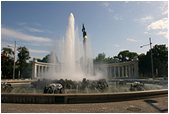
The next day was a walking tour of downtown Vienna. The first place we went was back to the park that had so impressed me the day before. Just as we arrived it began to sprinkle despite the warm weather. By the time we made it to Hochstrahlbrunnen Fountain it started pouring down.  Hochstrahlbrunnen Fountain has 365 small jets around the edge symbolizing the days of the year. A middle circle of 7 jets represent the week days while the central island has 24 low fountains and 12 high ones to represent the hours of the day and months of the year. In addition there are a further 30 jets for the days of the month. We had to admire the fountain from beneath the shelter of a tree as it appeared as through our walking tour was going to come to a stop due to the rain that just would not let up. 

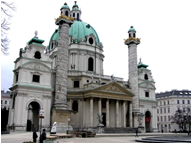
Nevertheless, from there we continued on towards Karlskirche. In 1713, when the Black Plague swept through Vienna, the Emperor Charles VI made a vow: if the plague left the city, he would build a church dedicated to his namesake, St. Charles Borromeo. St. Charles was a 16th century Italian bishop famous for ministering to Milanese plague victims. The emperor's prayer was answered, and construction on the church began in 1715. The Karlskirche was built on what was then the bank of the River Wien and is now the southeast corner of a park complex. Vienna’s history is incredibly rich.  

What was so nice about Vienna is that everything is accessible by foot. Besides London, Vienna is also one of the few European cities where I was notably impressed by the successful mix of historic and modern architecture. The tasteful blend and the contrast between the two were most inspiring. As the rain was now wreaking serious havoc on our promenade, we ducked into a little Italian restaurant in the hopes that it would lighten up. As luck would have it, the rain stopped just as we were finishing up our lasagna. We were really quite fortunate! 

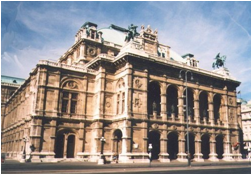
On our way we passed by the famous Opera house of Vienna. Vienna is the home of classical music and dance. The city is still marked by the works of Beethoven, Bach and Strauss, just some of the musical geniuses whose performances in this city would change the relationship between music and man for centuries to come. I thought about the piano lessons that I had as a kid growing up and the small busts of these men that I earned for practicing seven days a week. Their music has been the foundation for the music that I know today and it was quite surreal to stand where they once stood. We noticed that tours of the interior would be open the next day and so we decided that we would return. 

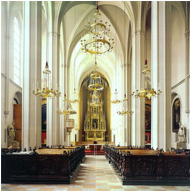
Just next to the Opera House was the Augustinerkirche. In 1327, Duke Frederick the Handsome (Friedrich der Schöne) founded this church with a cloister for the Augustinian friars. In 1634, the Augustinerkirche became the parish church of the imperial church. Having visited quite a number of churches in Europe, this church is definitely one of my favorites. In southern Europe one becomes accustomed to the meticulous and exhaustive frescos that line the contours of the high ceiling, archways and columns inside the church. However, this church was left completely unpainted. The interior was wait save for the alcove in the back of the church were the altar is found. The simplicity was quieting and even breathtaking.

We then walked through Heldenplatz ("Heroes' Square"), the historical plaza in Vienna. Many important actions took place there, most notoriously Adolf Hitler's announcement of the Anschluss of Austria to the German Reich in 1938. Just nearby, they were hosting a carnival. I was reminded of the Orange County Fair in the sense that there was a real family atmosphere with local musicians, rides for the kids and lots to eat. It was kind of nice see the Austrians in a more relaxed setting. 

Our walk led us up the main avenue Kärntner Strabe heading back to the hotel. It was at this point that Pedro and I both noticed that the Austrians love ice cream! Every one out of three people had an ice cream cone in hand every one out of five stores was a gelateria. I made a mental note to try some later on. 

Before heading back to the hotel our last stop was the Kartner strabe church. The glory of St.  Stephen's Cathedral is its ornately patterned, richly colored roof, 111 meters (361 ft) long, and covered by 230,000 glazed tiles. Above the choir on the south side of the building the tiles form a mosaic of the double-headed eagle that is symbolic of the empire ruled from Vienna by the Habsburg dynasty. On the north side the coats of arms of the City of Vienna and of the Republic of Austria are depicted.

That night we found a traditional Austrian restaurant. At first we thought the restaurant was closed because no one was there. However, the waiter greeted and seated us. In retrospect, I think we had arrived much earlier than our Austrian counterparts. The result was that we had the entire restaurant to ourselves. We had exceptional service and the traditional Austrian dish was very well prepared. We started off with a potato soup that was similar to the pumpkin soup we serve in the United States. As a main course, we had pork and sour kraut accompanied by an Austrian red wine. The Viennese people are very patriotic, which meant that finding a French wine was out of the question. Very full and woody in flavor, I found the Austrian wine to be quite good. The last stop on the menu was the apple strudel! Vienna is famous for its apple strudel and I now know why! 

Monday, May 24

After getting up late, our first stop was the back to the opera house to take the tour. Unfortunately, we were too late for the first tour and so we caught the second tour after having a serious lunch in a quasi-Spanish restaurant across the street. Once we got in the Opera house we were most impressed. The stage in Vienna is the largest in Europe. Towards the end of World War II, on March 12, 1945, the opera was set alight by an American bombardment, which was intended for the Raffinerie in Floridsdorf. The front section, which had been walled off as a precaution, remained intact including the foyer, with frescoes by Moritz von Schwind, the main stairways, the vestibule and the tea room. The auditorium and stage were, however, destroyed by flames as well as almost the entire décor and props for more than 120 operas with around 150,000 costumes. Eventually, the decision was made to rebuild the opera house as it had been. The result was a mix of modern and classical design. The stage is now the largest in Europe. The guide told us that we although the Opera sells out months in advance, however, tickets for standing room with shoulder room right in the center of the theater could be bought for only three euro if you were willing to wait in line before the show starts. I took one look at Pedro and it was clear that that was what we were going to do. 


After the tour, we went to the Kunsthistorisches Museum (Museum of Art History) and then it was already time to head over to the opera house and wait in line. That night Salome was playing. Having been unfamiliar with the this performance, I would soon find out that Salome was the Judean princess who had asked to have the head of John the Baptist on a silver platter. The Opera was extremely well down and performed by some of the best voices in the world. It was quite a privilege to have been a part of it. 

One the way out, we were again bombarded by people eating ice cream. I decided that I had to have some. Chocolate, pistachio and raspberry made for a deadly combination!

Tuesday, May 25

It was already our last day in Vienna. For the first time since our arrival we got up early enough to have breakfast in the hotel. 

Unfortunately, the natural history museum that I wanted to visit was closed. Consequently, we decided to visit the architecture museum. They had an exhibit on architecture in Vienna from the 1850s until the present day. The exhibition made the devastating impact of Hitler and the world war quite apparent. It seemed that the effects had been so demoralizing that it took thirty or so years until the inspiration to creatively design was fully recovered. 

Our last memories of Vienna would be walking back through the beautiful park that had been so inviting when we first arrived. A great weekend all in all, Vienna will go down as an awesome trip.

Lisbon, Portugal - 2010

Thursday, January 28 

I left work Thursday afternoon to catch the evening flight from Toulouse to Lisbon. My first glimpse of Lisbon was in the air. As it was early evening, the city was already alight. From the air, I was impressed by how white and pristine everything appeared. The port town is severed by the Tagus River with little suspension bridges connecting one side to the other. The thousands of miniature glowing and pallid building in the shadows of early dusk made a beautiful sight and I was eager to see the city from within. 

As usual, I had made no plans and had no agenda, so once on the ground; my first task was to find a place to stay. After a quick stop at the tourist information center, I hopped on the next bus to the city center. It was on my way down town that I really began to realize how much I was going to enjoy my weekend in Lisbon. The city is marked by old world street lamps and lanterns whose soft light made me feel like I was starring in a romantic movie. The city sidewalks are all made of limestone and basalt, which is why everything seemed so immaculate in the air. The two stones are cut into little 1-2 inch squares. The contrast of black and white allows for little mosaic designs that cover the entire city and it is simply beautiful. Most of the buildings are also made of limestone and the Arabic influence in the architecture is undeniable. Like in Marrakesh, some of the buildings are covered in tiny painted tiles.

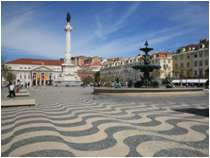
I got off the bus at one of the main city squares, Praça do Rossio. The liveliest square in the city, this is where people stop to sit and relax, or for a drink at the several atmospheric cafes with outdoor sitting (the most popular is the art deco Café Nicola on the western side). On either side of the square there are two baroque fountains, and in the center is a monument measuring 27 meters in height. It consists of a pedestal with marble allegories of Justice, Wisdom, Strength, and Moderation, qualities attributed to Dom Pedro IV, whose statue stands on top of the monument. Once I had oriented myself with the little map that I had received from the information center, I headed towards Bairro Alto, the historic part of Lisbon where I intended to stay. After a bit of searching around, I ended up landing upon a youth hostel. After ringing the doorbell for quite some time, the door was finally opened. I was greeted by a group of Americans who had heard me ringing the doorbell, but did not know was the hostess could be found. They pointed out a cell phone left at the reception desk and suggested that I call the number that they had been given and that I speak in Spanish as the hostesses was not very good in English. I had been told that the Portuguese, very proud of their culture and eager to set themselves apart from Spain, did not like to be spoken to in Spanish. However after a few seconds on the phone, it became clear that Spanish was the best way to go. The languages are similar enough that you can pick up about 50 percent of what they say and they seem to understand just about everything you say. Vera, the hostess, told me that she would be back in about a half an hour and that I would have to wait. 

A conversation in Spanish with a Columbian couple visiting Europe for the first time helped to kill the time and to got me back in the Spanish mode; good practice for the rest of the trip. Once Vera had come back to the hostel, I was shown my bad and was pleasantly surprised to find that the price for one night in a hostel with 4 clean bathrooms, a kitchen, a flat screen TV, free internet and a play station was only 12 Euros a night!

Shortly after, I walked back towards Rossio in order to meet George at the hotel where he was staying. George is a good friend of mine from New York, and his coming to Lisbon was the inspiration for my trip. We went to a local restaurant called the Emporio that had been recommended to George. I decided to have the swordfish as I had been told that Lisbon has really good seafood, which did not seem to hard to imagine. The dinner was quite nice, but “nothing to write home about”. I am too spoiled from having spent so many years in France. That night we went out to a couple clubs and lived it up as the obnoxious Americans that did not speak a word of Portuguese.   

Friday, January 29

The next morning, I woke up around noon and after a good shower, I headed down to George’s hotel to meet up for the day. George was still in bed and so we had arranged to meet up later that afternoon. I was off to explore Lisbon a bit on my own, a situation that I did not mind one bit. The first thing that I decided to see was the Atlantic Ocean. I figured that if this was the ocean that had inspired Christopher Columbus to discover the world to which my ancestors would eventually move and in which I was born, then it was worth taking a look at. To get there I walked through the giant archway of Rua Augusta leading to the Plaça do Comércio, the square where trade ships used to bring their merchandise in ancient times.  From this city square, steps lead down to the water, just where the Tagus River gives way to the sea. On the other side of the river, a giant statue of Jesus with his arms stretched out making the shape of a cross, stood on a pedestal overlooking the entire city of Lisbon. I was reminded of the famous statue in Brazil and wondered which one had been built fist. I would later found out that the statue Cristo Rei (Christ is King) is a replica of the Brazilian statue of Jesus in Rio as is bridge joining the two sides of the river is a replica of the Golden Gate Bridge. Portugal is around 95% Roman Catholic. When I was there, the sun was just slightly behind the statue of Jesus and it made quite a powerful statement. Muito etéreo!  

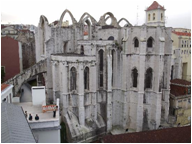
My next stop was the Archaeological Museum. As I was walking through hilly city, I was impressed by the old time trolley cars that ran up and down the streets. It felt a bit like San Francisco, but with the sounds of Portuguese. The Portuguese language is a strange one. Phonetically, there are a lot of sounds that are not found in other Latin languages. George said that is sounds like drunken Germans trying to speak Spanish. In retrospect, I think that about sums it up. Once I arrived at my destination, I was quite impressed. The archeological museum was located inside the ruins of an ancient church, Iglesia do Carmo. The church was originally built in 1389 by the Grand Connétable Nuno Alvares Pereira. The church faces the castle of São Jorge, a castle built on a hill that hovers over the entire city. In 1755, Lisbon was hit by a tremendous earthquake that nearly destroyed all of the buildings and works of art. People still talk about this earthquake today; 8 on the Richter scale, around 100,000 people died. As the earthquake occurred on a religious holiday and caused so much devastation, it had a profound effect on the culture the philosophical development of the people. One of the few buildings to have survived was this church, although its roof had caved in. I have been in so many cathedrals whose towering columns and high painted ceilings are meant to inspire thoughts of God and the heavens, but it was quite impressive to be in a cathedral whose towering columns lead directly to the heavens. The museum was located in the convent. Like southern France, Portugal has a lot of archeological evidence pointing to the practices and living circumstances of early man. As I was looking at their pottery, combs, earrings and early tools, I was reminded of the ancient mummies that I had seen in Argentina and I could not help but ask what Gauguin had asked so many years ago: Where do we come from? Where are we? Where are we going? 

From there, I decided to walk up to the big park, Parque Eduardo VII. I was hoping that the parks in Portugal would be as impressive as the ones in Spain. On the way I passed through the Estação do Rossio. On the square, there is what looks like a giant palace known as Restauradores. Like its name suggests, the building is entirely dedicated to fine dining; not too shabby. From there, I hiked slightly uphill still with the objective of reaching the park. I continued to walk over hundreds of black and white mosaics, as the running water from terraced fountains accompanied me on either side. At the top of each fountain, Poseidon provided the water’s source via an urn whose contents never ran out. Once I had finally reached the park, I was a bit disappointed. The park mainly consisted of a grass lawn, nothing to rival the parks of Spain. However, as it was located fairly high up, I was afforded an incredible view of the city. 

I then went back to meet George back at his hotel. George and I decided that we would visit the castle of Saint George (Castelo de São Jorge), as this was most befitting. The oldest parts of the castle date back to the 6th century, when it was fortified by the Romans, Visigoths, and eventually the Moors. It served as a Moorish royal residence until Portugal's first king Afonso Henriques captured it in 1147 with the help of northern European crusaders on their way to the Holy Land. It was then dedicated to St. George, the patron saint of England, commemorating the Anglo-Portuguese pact dating from 1371, and became the royal palace until another one (that was destroyed in the Great Earthquake) was built in today's place of commerce. The castle towers over the entire city and we arrived just as the sun was setting over the water. Lisbon is a beautiful town not only from within its streets, but also from afar. 

That night, we went to dinner with some Portuguese guys that were friends of George. I asked them, “What is the most traditional thing on the menu?” They all agreed on the same dish, a breaded sausage made from beef instead of pork, served on a baked potato with a small green salad. After trying it, I thought, “Well, I guess that is why Portugal is not really known for its food!” However, if the food was not good, the people made up for it in hospitality and kindness; the complete opposite of France! Everyone was so friendly. They insisted on showing us the Lisbon night life. Almost all of the bars clubs are located in little old world stores that could not sit more than ten or fifteen people. The result is that everyone grabs there drink and just hangs out in the narrow streets. We had a good time. 

Saturday, January 12

The next morning, I headed over to pick up George and we had a fish sandwich before heading off the botanical gardens, Jardin Botânico. Because of the many hills in Lisbon, there are a lot great places to check at the view and the botanical gardens where no exception. The gardens were structured with limestone steps that led from on terrace to the other. Laid out between 1858 and 1873, it was once considered the best botanical garden in Southern Europe. Today, although showing some clear signs of neglect, it still has one of the largest collections of subtropical vegetation in Europe. Its dense vegetation and exotic plants make it one of the most calming spots in the city.

From there we went to the city’s giant elevator. The elevator is next to the ruins of the old church and takes you up to the top of the city’s skyline. This is one of the city's best-loved landmarks and is known as Santa Justa. This extraordinary structure was built at the turn of the century by the Portugal-born French architect Raoul de Mesnier du Ponsard (an apprentice of Gustave Eiffel, explaining the structure's similarities to Paris' Eiffel Tower). It was built to connect downtown to Bairro Alto; the lowest and highest points of the city. Originally powered by steam, it is 147ft high and remains an interesting example of post-Eiffel iron architecture. The top of the Neo-Gothic tower, reached via a spiral staircase, has a cafe with splendid views of the city, including over Rossio Square, the castle and the river.

From there we went to a few shops and just sat in a couple of cafés talking about everything and nothing at all. Since I have been living in France, this has become of my favorite pastimes. 

As night began to fall, George had gone back to the hotel and I walked up to Graça, one of the oldest churches in Lisbon, located near the castle. As I walked in, I realized that they were having mass. I sat down and listened although I could only make out about twenty-five percent of what was being said. I then walked back to my hostel, climbing up and down the narrow steps and streets all carved in intricate designs, illuminated by the glowing old world street lamps. This was my last night in the beautiful city of Lisbon.